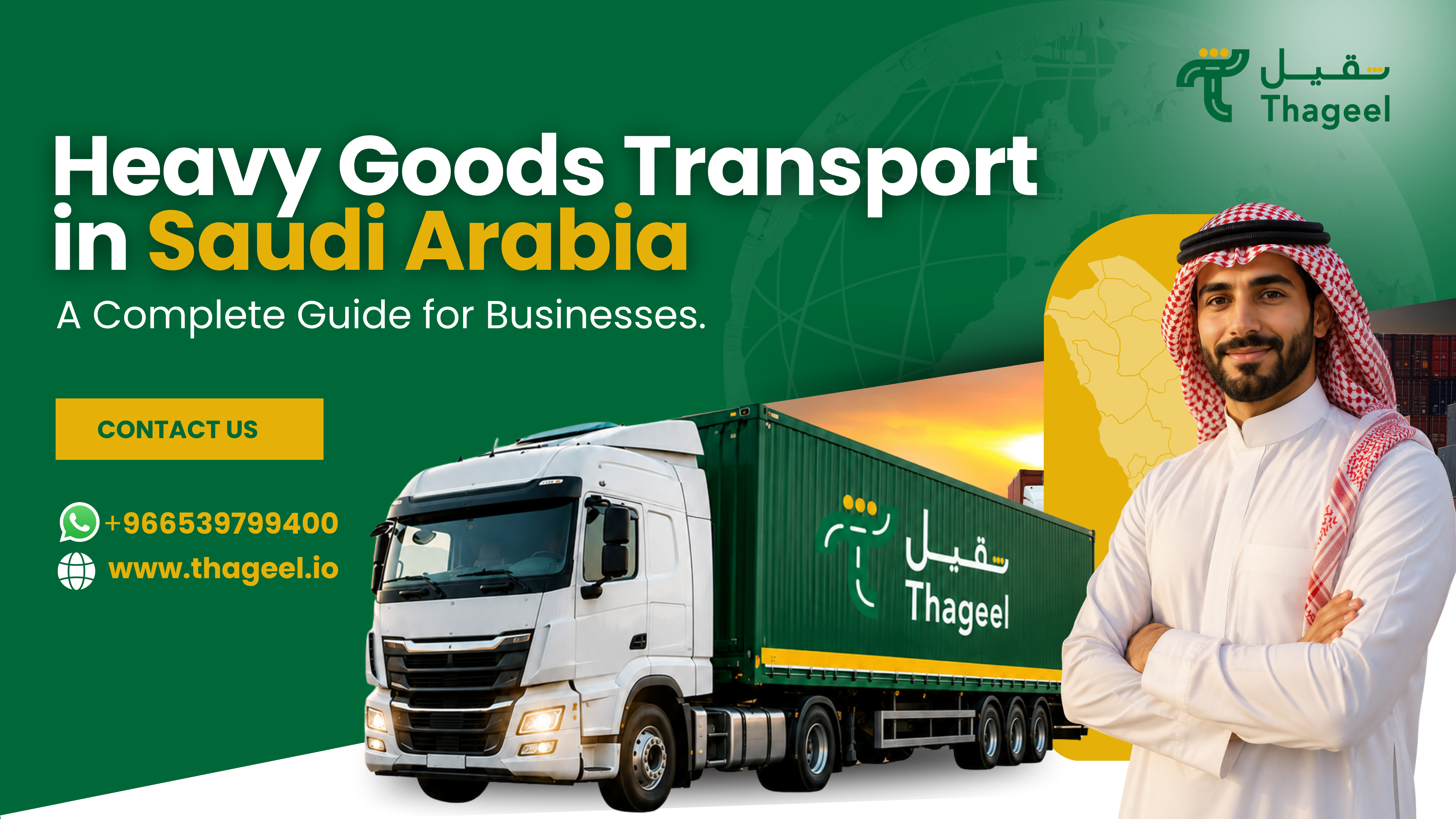
Heavy goods transport in Saudi Arabia is a critical part of the country’s supply chain, connecting manufacturers, suppliers, warehouses, distributors, retailers, and customers across the Kingdom.
For businesses, efficient heavy goods transport is not simply about moving goods from one location to another. It affects delivery times, transportation costs, inventory management, customer satisfaction, and overall supply chain performance.
But how does heavy goods transport work in Saudi Arabia? What types of services are available? What affects freight costs? And how can businesses choose the right transportation partner?
This guide covers the essentials.
What Is Heavy Goods Transport in Saudi Arabia?
Heavy goods transport is the movement of goods by road using heavy trucks and other commercial vehicles designed for freight.
It is a specific activity within the wider land transport sector, which also includes passenger transport, light goods transport, and other road-based activities.
In Saudi Arabia, the Transport General Authority regulates the activity under the Implementing Regulations for Heavy Goods Transport Activities for Commercial and Non-Commercial Purposes. This official terminology closely reflects Thageel's name and its specialization.
Businesses use heavy goods transport to move products and materials between factories, warehouses, distribution centers, retail locations, and customers. It is also an important part of connecting Saudi Arabia's major commercial and industrial regions.
Common routes include:
- Riyadh to Jeddah
- Riyadh to Dammam
- Jeddah to Riyadh
- Dammam to Riyadh
- Major cities to industrial areas and warehouses
For companies operating across multiple locations, reliable heavy goods transport can make a significant difference to daily operations.
Why Is Heavy Goods Transport Important in Saudi Arabia?
Saudi Arabia's large geographic area and expanding commercial and industrial activity make heavy goods transport essential to supply chains.
According to the General Authority for Statistics (GASTAT), land transport and transport via pipelines generated approximately SAR 64.1 billion in operating revenue in 2024, representing 36% of operating revenues across transportation and storage activities.
Road freight is also important for international trade. In 2024, road freight exports through Saudi land ports exceeded 13.4 million tons, while imports exceeded 12.2 million tons.
These figures demonstrate how important land transportation is to the movement of goods in and around the Kingdom.
How Does Heavy Goods Transport Work?
A typical heavy goods transport shipment involves five basic steps:
1. Shipment Planning
The business identifies the pickup and delivery locations, cargo type, weight, dimensions, delivery requirements, and preferred delivery date.
2. Truck Selection
The right vehicle is selected based on the shipment.
Depending on the cargo, businesses may require dry vans, flatbeds, refrigerated trucks, tankers, or specialized vehicles.
3. Loading
The cargo is loaded and secured according to its characteristics and transportation requirements.
4. Transportation
The truck transports the shipment from the pickup location to its destination. Visibility during this stage is important because businesses need to know whether their shipment is progressing as planned.
5. Delivery
The cargo is delivered, and the shipment is completed with the required delivery confirmation and documentation.
Types of Heavy Goods Transport Services
Different businesses have different transportation requirements.
Full Truckload (FTL)
FTL is generally used when a shipment requires most or all of a truck. It can be suitable for large shipments, regular business transportation, and time-sensitive deliveries.
Less Than Truckload (LTL)
LTL is suitable when a shipment does not require an entire truck. Multiple shipments may be transported together, making it an option for smaller loads.
Refrigerated Freight
Refrigerated trucks are used for goods that require temperature-controlled transportation, including certain food products, pharmaceuticals, and perishable goods.
Flatbed and Specialized Freight
Flatbed and specialized vehicles are commonly used for machinery, construction materials, industrial equipment, steel, and other cargo that may require special loading arrangements.
What Determines Heavy Goods Transport Costs in Saudi Arabia?
There is no single fixed price for heavy goods transport.
The final cost can depend on:
Distance: Longer routes generally require more fuel, time, and vehicle utilization.
Weight and dimensions: Heavy or oversized shipments may require specific vehicles or additional planning.
Truck type: A standard truck has different operating costs from a refrigerated or specialized vehicle.
Loading and unloading: Long waiting times can increase operational costs.
Truck availability: Demand and vehicle availability can influence transportation prices.
This is why businesses should evaluate the total transportation cost, rather than choosing a provider based only on the lowest quoted rate.
Common Heavy Goods Transport Challenges
Businesses in Saudi Arabia can face several challenges when managing road transportation.
Limited Visibility
When shipment information is managed through phone calls, messages, and spreadsheets, it can become difficult to maintain a clear view of shipments.
Truck Availability
Finding the right vehicle at the right time can become challenging during periods of high demand.
Waiting Time
Delays during loading and unloading reduce vehicle utilization and can increase costs.
Manual Coordination
Coordinating shipments across multiple teams, drivers, warehouses, and carriers can create communication gaps.
Inconsistent Performance
Different carriers may provide different levels of reliability, communication, and delivery performance.
How Technology Is Improving Heavy Goods Transport?
Technology is changing how businesses manage transportation.
Digital platforms for heavy goods transport can help companies organize shipment requests, coordinate transportation, manage carrier information, improve visibility, and track performance.
In Saudi Arabia, Thageel provides a digital platform where businesses can submit shipment requirements, connect with licensed transportation providers, and manage heavy goods transport through a more structured process.
The goal is not simply to replace paperwork with software.
The real goal is to make heavy goods transport more visible, measurable, predictable, and easier to manage.
For businesses, better transportation data can also help identify recurring delays, inefficient routes, waiting times, and carrier performance issues.
How to Choose a Heavy Goods Transport Partner?
Before selecting a heavy goods transport provider in Saudi Arabia, businesses should consider:
- Does the provider understand your cargo requirements?
- Can they provide the right truck when needed?
- How will shipment information be communicated?
- How are delays handled?
- Can they support recurring shipments?
- Are the relevant transportation requirements being met?
- Can you measure delivery and carrier performance?
Price is important, but reliability should be evaluated alongside cost.
Businesses that prefer to compare transportation options digitally can use Thageel to submit shipment requirements and coordinate freight requests through one platform.
How Can Businesses Improve Heavy Goods Transport Efficiency?
Businesses can improve transportation performance by:
- Planning shipments in advance.
- Selecting the right vehicle for each shipment.
- Reducing loading and unloading waiting times.
- Measuring carrier performance.
- Improving shipment visibility.
- Using transportation data to identify inefficiencies.
In many cases, the solution is not simply more trucks.
Better planning, coordination, and information can make the existing transportation operation significantly more efficient.
The Future of Heavy Goods Transport in Saudi Arabia.
Saudi Arabia's logistics infrastructure continues to grow. GASTAT reported 23 activated logistics centers in 2024, covering approximately 34.6 million square meters.
As warehouses, distribution centers, factories, and commercial operations continue to expand, businesses will need increasingly reliable ways to move goods between locations.
The future of heavy goods transport in Saudi Arabia will not depend only on the number of trucks available.
It will increasingly depend on visibility, reliability, data, and efficient coordination.
Frequently Asked Questions
What is heavy goods transport in Saudi Arabia?
Heavy goods transport is the transportation of goods by road using trucks and commercial vehicles between businesses, warehouses, factories, distribution centers, and customers.
How much does heavy goods transport cost in Saudi Arabia?
Heavy goods transport costs vary depending on distance, cargo weight, dimensions, truck type, route, availability, and loading and unloading requirements.
What types of trucks are used for heavy goods transport?
Common options include dry vans, flatbeds, refrigerated trucks, tankers, and specialized vehicles.
Which Saudi cities have high demand for heavy goods transport?
Riyadh, Jeddah, and Dammam are major commercial and industrial centers with significant demand for land transportation.
How can businesses reduce heavy goods transport costs?
Businesses can improve costs through better shipment planning, reducing waiting times, selecting suitable vehicles, measuring carrier performance, and using transportation data.
Conclusion
Heavy goods transport is one of the foundations of business logistics in Saudi Arabia.
For manufacturers, distributors, retailers, and other businesses, reliable transportation can mean fewer delays, better inventory management, and more predictable operations.
The best heavy goods transport strategy is not necessarily about finding the cheapest truck. It is about building a transportation process that combines cost efficiency, reliability, visibility, and performance.
Thageel helps businesses manage heavy goods transport through a structured digital approach that connects shipment requirements with licensed transportation capacity and keeps key shipment information in one place.
Have a shipment to move? Submit your requirements through Thageel's RFQ portal, and our customer service team will contact you with a quotation as soon as possible.